



Phone: 0086-13835148369
Tel: 0086-351-6814836 Ext.8032
Fax: 0086-351-8390339
E-mail: sxmidas.com@aliyun.com
Website2:www.midaspipelines.com
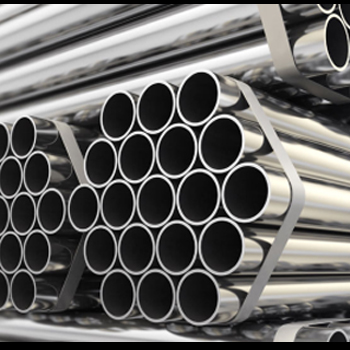
There is a type of steel tube you'll rarely see on construction sites or in municipal pipeline projects. But it's there – in the clean workshops of pharmaceutical plants, between fermentation tanks in breweries, in the transfer lines for biologics. It's called the sanitary stainless steel tube.
The name sounds highly technical, but the logic is simple: its job is to deliver liquids safely and purely to where they need to go. No errors. No contamination. No trouble. MIDAS focuses on just three things when making sanitary stainless steel tubes.
First: The inner surface.
The core of a sanitary tube is not its outer surface – it's the inner wall. Ordinary steel tubes have rough inner surfaces with microscopic cracks and pits invisible to the eye. When liquid flows through, residue gets trapped in these crevices, and over time, they become breeding grounds for bacteria.
MIDAS sanitary tubes undergo precision cold drawing and bright annealing, with the internal surface roughness (Ra) strictly controlled to below 0.4 μm. What does that mean? It means a mirror-like smoothness – liquid flows through without clinging, and rinsing cleans it completely. No residue trapped, no bacteria bred. That is the true meaning of "sanitary."
Second: The material.
Sanitary pipelines often carry consumable products or pharmaceutical liquids. If the material is wrong, nothing else matters.
MIDAS uses 304L and 316L stainless steel, with low carbon content. After welding, no carbides precipitate out, and corrosion resistance remains stable. Grade 316L, in particular, contains molybdenum, maintaining its integrity even in acidic and chloride-containing environments. Used in pharmaceutical and food industries, it does not release harmful substances into the medium – even over decades of use. Every batch of tubes comes with a complete material test certificate, with fully traceable composition and verifiable source. This is not a bonus – it's the baseline.
Third: The weld.
Where there are pipes, there are welds. And where there are welds, there is risk. The weld on a sanitary tube needs to be not only strong, but also smooth. A weld bead that's too high creates turbulence and dead zones. Internal porosity or slag inclusions become starting points for leaks.
MIDAS sanitary tubes are welded using the TIG (Tungsten Inert Gas) process, producing uniform weld formation with smooth inner and outer surfaces. Post-weld solution annealing eliminates the risk of intergranular corrosion in the heat-affected zone, restoring the weld area to performance matching the base material. A weld that has passed destructive testing is a weld you can truly rely on.
MIDAS sanitary stainless steel tubes – clean pipes, clean promises.
We don't cut corners. We don't compromise on standards. Because in sanitary tubing, being just a little off means it's no longer "sanitary."
If quality is also important to you, we are always here to assist you.
Previous: Steel Pipe Fittings – Essential Components for Piping System Integrity
Next: Why Universal Couplings Are Widely Used for Pipe Repair and Pipeline Renovation
Phone: 0086-13835148369
Tel: 0086-351-6814836 Ext.8032
Fax: 0086-351-8390339
E-mail:sxmidas.com@aliyun.com