



Phone: 0086-13835148369
Tel: 0086-351-6814836 Ext.8032
Fax: 0086-351-8390339
E-mail: sxmidas.com@aliyun.com
Website2:www.midaspipelines.com
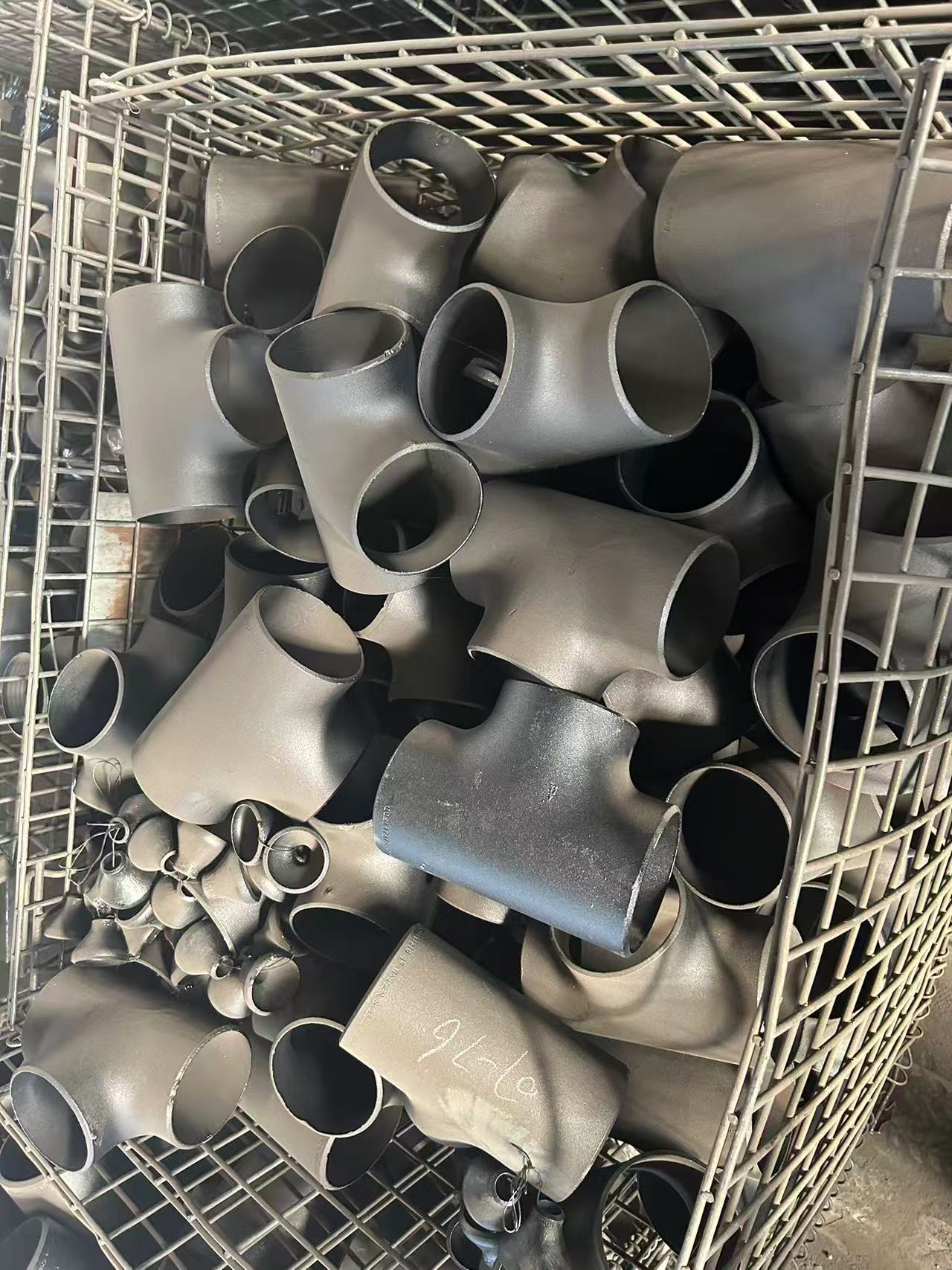
Carbon steel pipe fittings are essential components in pipeline systems for oil and gas, petrochemical, municipal water supply and drainage, and other industries. Their quality directly affects the safe and stable operation of the entire pipeline network. During production, transportation, installation, and service, carbon steel pipe fittings are prone to various defects due to factors such as material selection, process control, and operating conditions.
Welding is the core process for manufacturing and installing carbon steel pipe fittings, and welding defects are the most frequent quality problems.
First, the welding material does not match the base metal of the carbon steel pipe fitting—for example, using low-strength electrodes for high-strength carbon steel, leading to stress concentration at the weld joint. Second, improper welding process parameters: excessively high welding current causes overheating of the weld zone, while overly fast cooling speed leads to the formation of brittle martensite. Third, insufficient preheating or post-weld heat treatment, especially for thick-walled pipe fittings, where internal welding stress cannot be released in time, resulting in crack initiation and propagation.
· Incomplete fusion and incomplete penetrationLow welding current or excessive welding speed leads to insufficient heat input, making it impossible to fully melt the base metal and welding wire. The groove design of the pipe fitting is unreasonable, or the assembly gap is too small, resulting in the failure of the molten metal to fill the gap between the weldments, thus forming incomplete fusion or incomplete penetration defects.
Carbon steel has poor corrosion resistance, and corrosion defects are very common during service, which seriously affect the service life of pipe fittings.
The pipe fitting is in contact with corrosive media for a long time, such as acidic or alkaline solutions in chemical pipelines, or humid air containing chloride ions in coastal areas. The surface oxide film of carbon steel is destroyed, and the metal matrix reacts with the corrosive medium, resulting in uniform thinning of the pipe fitting wall thickness.
· Galvanic corrosionWhen carbon steel pipe fittings are connected to metal components with higher electrode potentials in the same electrolyte, a galvanic cell is formed. Carbon steel acts as the anode and undergoes accelerated corrosion, while the other metal acts as the cathode and is protected.
Material defects are usually introduced during the smelting and rolling process of carbon steel.
During the smelting of carbon steel, non-metallic inclusions are not completely removed and remain in the steel. These inclusions reduce the mechanical properties of the pipe fitting, such as toughness and fatigue strength, and can easily become the source of cracks under external force.
· Lamination defectsThe carbon steel billet has shrinkage cavities, porosity, or other defects, which are not eliminated during the rolling process and are pressed into laminated structures parallel to the rolling direction. Laminations seriously affect the pressure-bearing capacity of pipe fittings and are prone to cracking along the lamination surface under internal pressure.
Previous: Analysis of Stainless Steel Flange Sealing Surface Types
Next: Application of Stainless Steel Pipes for Home Water Supply and Drainage Systems
Phone: 0086-13835148369
Tel: 0086-351-6814836 Ext.8032
Fax: 0086-351-8390339
E-mail:sxmidas.com@aliyun.com